

International Physical Theatre Workshop
Acting in Physical Theatre
August 17–21, 2026 · Berlin, Germany · 28 hours / 5 days
A 5-day professional intensive in Berlin for actors, directors, dancers, choreographers, and movement practitioners.
Train physical action, partner work, rhythm, composition, and psychophysical presence through Meyerhold Biomechanics, Michael Chekhov’s Psychological Gesture, and Stanislavski’s Physical Action. Strictly limited places. Selection based on CV. Working language: English. Certificate available upon completion.
Admission Is Selective
Movement belongs at the centre of the creative process - as structure, as impulse, as the source of meaning on stage.
The body is where action, rhythm, relationship, and pressure become visible.
During five intensive days, participants work with physical action, partner contact, rhythm, space, improvisation, and composition. The training draws on Meyerhold’s Biomechanics, Michael Chekhov’s Psychological Gesture, and Stanislavski’s Physical Action - as working tools for today’s rehearsal room.
Due to demand and the necessity of maintaining cohort integrity, enrolment is strictly limited and acceptance is based on your professional background and CV. This ensures an environment of peer-level commitment and practical exchange.

Requirements for Participants
This workshop is designed for practitioners who already know what it means to work in a studio, rehearsal room, stage process, dance space, circus practice, or performance laboratory.
Prior experience with Meyerhold, Chekhov, or Stanislavski is welcome but not required.
What matters: physical readiness, attention to partners, willingness to work with contact, and the discipline to repeat, adjust, and analyse action.
Language
Working language is European English.
Openness to Experimentation
Readiness to explore new methods and ideas.
Etiquette
By participating in our events, participants are expected to follow our etiquette.
Application
Submit a CV. Selection is competitive and based on professional background and alignment with the training’s goals.
What This Week Focuses On
-
Physical action as the basis of performance: impulse, resistance, rhythm, and repeatable score.
-
Partner work: contact, reaction, distance, pressure, and ensemble attention.
-
Space and composition: how bodies organise meaning before words begin.
-
Text through the body: how actors and dancers can approach text as action, as something that changes the body.
-
Psychophysical methods: Meyerhold’s Biomechanics, Michael Chekhov’s Psychological Gesture, and Stanislavski’s Physical Action in practical studio work. Participants may work with principles drawn from biomechanical études, psychophysical impulse, rhythm, balance, opposition, partner reaction, and composition in space.
-
Rehearsal application: how to bring the training into your own directing, teaching, performance, or movement practice.
This workshop is built for practitioners with experience in performance, directing, dance, choreography, movement, circus, or theatre education. The group is selected by CV to protect the working level of the studio.
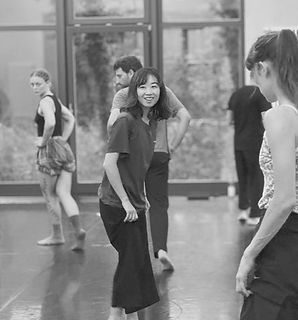

What You Take Back Into Your Practice
By the end of the workshop, you will have worked with:
-
repeatable physical actions that can be used in rehearsal;
-
partner-based exercises for attention, reaction, and contact;
-
principles of composition in space;
-
psychophysical tools for connecting movement, action, and inner impulse;
-
practical language for applying physical theatre methods in directing, teaching, performance, or choreography.
What This Training Can Change in Your Practice
This is focused studio work where impulse meets structure, and movement becomes action with dramaturgical purpose.
You learn to recognise when movement decorates the scene - and when it actually changes the action, the partner, the rhythm, or the audience's focus.
International Network
Work in an international group of practitioners who bring different training backgrounds into the same studio. The exchange is practical: bodies, methods, habits, questions, and rehearsal cultures meet in one room.
Methodology
Meyerhold, Chekhov, and Stanislavski are approached as practical tools: how to organise impulse, build action, sharpen attention, and make movement readable in the rehearsal room - helping you make clearer physical choices as a performer, director, teacher, or movement practitioner.
International Physical Theatre Workshop:
Gallery & Videos


Workshop Leaders

Sergei Ostrenko
Director, choreographer and performance teacher with more than 40 years of professional experience. Sergei has directed over 40 theatre productions and led international projects in numerous countries across Europe and beyond, combining rigorous physical training with clear dramaturgical structure.

Gennadiy Ostrenko
Movement director and specialist in theatre biomechanics, physical expressiveness and stage combat. Trained in fine arts, Gennadiy has dedicated his career to theatre, focusing on physical theatre and movement direction and frequently collaborating with his brother Sergei on international productions and training projects.
Schedule
17-20 August 2026:
10:30-13:00 - Practical Training
13:00-14:30 - Lunch Break
14:30-18:00 - Practical Training
18:30 - 20:30 - Evening Elective: Digital Presence Lab for Performing Artists (optional; advance registration by email required)
21 August 2026:
10:30-13:00 - Practical Training
13:00-13:30 - Lunch Break
13:30-15:00 - Practical Training
The organiser may adjust timings if needed.
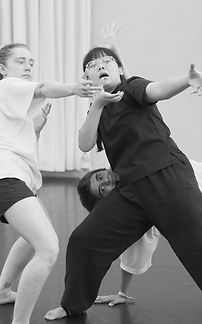


Past Participants


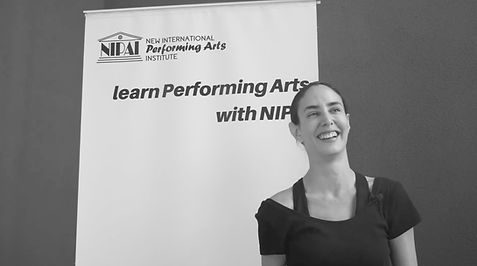

Getting feedback through our tasks is what makes NIPAI innovative for me. It encourages their students to make creative decisions by themselves, without being reliant on teachers or other external influences for reassurance. Finding the balance between structured teaching and guidance without interference is challenging, and NIPAI’s approach has been outstanding.

Juliane Brommeland, Norway
Google Maps review
Very nice organization and professional guidance that rooted in the shared fundamental skills of performing arts. It was especially pleasant for me to discover that the mentors has extensive artistic background and really mean to help you grow as a performer and director. Because as an emerging talent myself, I have been approached by so many people who only want to take advantage of young professionals to run their business. Really glad that NIPAI is not one of them.

Xueni Yang, Czech Republic
Google Maps review
Tuition Fee
Regular Tuition: €790 after this date.
The fee covers full participation in the 5-day international workshop (28 working hours), attendance at the evening elective Digital Presence for Performing Artists (8 working hours), and a certificate of completion, subject to full attendance and submission of the final report.
Accommodation and meals are arranged individually by participants. For registered participants, we can recommend accommodation options close to the venue.
Funding & Support
Depending on your country and professional status, you may be eligible for support from cultural funds, mobility programmes, or your home institution.
To help you plan, we offer an overview of typical funding channels used by our participants.
Certificate & Creative Report
Upon completing at least 28 working hours of the workshop and submitting a short written or video reflection on your experience (approx. 1500 words for written reports), you will receive a certificate from the New International Performing Arts Institute (NIPAI).
Many participants use this documentation to support funding applications, residency proposals, or professional development reports within their home institutions.
Venue
DOCK 11 EDEN,
Breite Str 43, 13187 Berlin (Pankow)
The venue provides a fully equipped dance and theatre studio suitable for intensive physical work. Registered participants receive detailed practical information, including how to reach the venue and recommended accommodation options nearby.

FAQs
What is the NIPAI Physical Theatre Workshop? The NIPAI Physical Theatre Workshop is a selective 5-day intensive training programme held in Berlin, Germany. Led by Sergei and Gennadiy Ostrenko, this professional-level workshop focuses on psychophysical action, biomechanics, and movement directing. The programme is designed for experienced performers - actors, directors, choreographers, and circus artists - committed to rigorous practice. Admission is competitive and based on professional background and CV. The intensive includes 28 hours of focused work.
What is included in the workshop fee? Your workshop fee covers: Training & Instruction: •28 hours of intensive practical training •Direct work with Sergei and Gennadiy Ostrenko (40+ years experience) •Artistic guidance Certification & Network: •Professional certificate of completion (requires full attendance + reflection essay) •Access to NIPAI alumni communication and future training announcements •Connection to an international community of practitioners Not included: •Accommodation in Berlin •Meals and daily expenses •Travel to/from Berlin •Personal insurance
Where is the workshop held in Berlin? The intensive takes place at DOCK 11 EDEN, a professional theatre space located at Breite Str. 43, 13187 Berlin (Pankow district). Getting there: •Public Transport: Tram M1 to “Pankow Kirche” (5-minute walk) or S-Bahn to “Pankow” station (10-minute walk) •Central Location: Approximately 20 minutes from Berlin city centre •Address for GPS: Breite Str. 43, 13187 Berlin Registered participants receive detailed venue information, including maps, nearby accommodation suggestions, and local amenities. The Pankow area offers numerous cafés and restaurants for lunch breaks.
What should I bring to the workshop? Come prepared for intensive physical work. Essential: •Comfortable, flexible movement clothing. Many participants prefer layers (t-shirt, long-sleeve, sweatshirt) as studio temperature varies with activity level. Avoid restrictive clothing, jewellery, or anything that inhibits movement. •Indoor training shoes or socks with grip (no street shoes in studio) •Water bottle •Notebook and pen for reflection and notes •Any personal items for physical comfort (knee pads, etc.) Recommended: •Change of clothes •Light snacks for breaks •Personal first aid items if needed
Our Parthners
