
Twenty-six years of shaping the way performing arts are made and taught.
NIPAI was founded at a moment when contemporary performance-making was changing faster than most educational institutions could respond. It was built not to describe that change, but to be at the centre of it.
Where the institute began
Founded in 2000, NIPAI was established on a single conviction: that the gap between theoretical training and professional practice was not a minor inconvenience but a structural failure of performing arts education. Graduates left conservatories and drama schools with extensive knowledge of their craft and insufficient readiness to lead, direct, teach, or manage in the actual conditions of a working company or institution.
The institute was built around what would become known as the Knowledge Applicability Concept - the principle that no knowledge has value unless it can be put to work immediately in the performance-making process. From its first programmes, NIPAI refused the conventional separation between learning and doing. Every course, every workshop, every module was designed to produce usable professional output, not only understanding.
3000+
Professionals trained
60+
Countries represented
26
Years in operation
6
Continents reached
A Berlin institution with an international presence
NIPAI is based in Berlin - a city whose position at the centre of European contemporary arts is not incidental to the institute's work, but central to it. Berlin's density of international practitioners, its culture of interdisciplinary exchange, and its openness to artists from every tradition make it the natural home for an institute whose students arrive from over sixty countries.
Over twenty-six years, NIPAI has taken its programmes far beyond any single location. The institute has organised intensives, residencies, labs, and conferences across Europe and beyond - in Italy, Slovenia, Malta, Ukraine, Austria, and the Baltic states, among others. This geographic range is a direct expression of the institute's founding conviction: that serious training in contemporary performance-making must be international not in name, but in practice.
Today NIPAI operates across two permanent locations - Berlin and Laubegg, Austria - while continuing to bring its work to artists in multiple countries each year. Online programmes extend that reach further, allowing practitioners from North and South America, Asia, Africa, and the Pacific to train with NIPAI faculty without leaving their home countries. The institute's annual international conference brings this global community together in person - a gathering of directors, choreographers, movement specialists, researchers, and educators that has become one of the most internationally diverse events in the performing arts calendar.
What the method produces
The measure of any educational institution is where its alumni work and what they build. NIPAI graduates hold positions as directors, movement directors, acting coaches, choreographers, and arts managers at theatres, opera companies, universities, and independent performance organisations across six continents.
Alumni have gone on to direct at national opera houses, found independent theatre companies and cultural foundations, lead university acting programmes, and create internationally touring productions. The Ostrenko Method - the physical theatre methodology developed and taught at the institute - has become a reference point in the training of performers who need to work across disciplines, languages, and cultural contexts.
"The experience from NIPAI has definitely influenced the way I work with ensembles and build dramaturgy through rhythm, physical action and collective imagination. I often return to those tools in my directing practice."
Rafał Supiński
Director - Polish National Opera, Warsaw Chamber Opera · Poland
"Very nice organization and professional guidance rooted in the shared fundamental skills of performing arts. The mentors have extensive artistic background and really mean to help you grow as a performer and director."
Xueni Yang
Actress, choreographer, director · China / Czech Republic
"What a wonderful time I spent with so many international artists. I was so happy to be in a room with like-minded people, going back to physical work, and sharing beautiful experiences. Would definitely recommend for actors to get back into their bodies and train."
Melissa Anne Morris
Actor, opera director, playwright, educator · Canada
"There's deep philosophy and meaning behind the teaching and leadership as a director. I really appreciated the different approach in guiding actors through physical action."
Ji Won Jeon
Director, Assistant Professor in Directing, Michigan State University · South Korea / USA
Who the programmes are designed for
NIPAI's programmes are designed for artists who have completed full-time training and have entered the profession - but who have recognised that formal education left them underprepared for the demands of actually leading creative work.
The institute works with directors, movement directors, acting coaches, choreographers, arts managers, and creative leaders at all career stages. What students share is not a common background but a common need: practical, immediately applicable knowledge that can change how they work from the day they return to their rehearsal room or office.
Students come from more than sixty countries. The international composition of every cohort is not incidental - it is part of the training. Ensemble techniques that must function across languages, cultural references, and movement traditions are more demanding, and more useful, than those developed in a homogeneous group.
Our approach to education
NIPAI was founded on a principle that remains central to every programme the institute offers: knowledge that cannot be applied is not yet knowledge. It is information. The distance between the two is where most performing arts education fails its students - and where NIPAI begins.
The institute's Knowledge Applicability Concept holds that the only meaningful test of any technique, method, or theoretical framework is what a practitioner can do with it under real professional conditions. This is not a philosophy of anti-intellectualism. NIPAI's faculty bring decades of rigorous scholarly and artistic engagement with the traditions they teach - from Meyerhold and Michael Chekhov to contemporary physical theatre and interdisciplinary performance. The difference is that theory at NIPAI is always in service of practice, never a destination in itself.
This means that from the first session of any NIPAI programme, students are creating. Not preparing to create. Not studying examples of creation. Creating - with all the difficulty, uncertainty, and professional discipline that entails. Faculty work alongside students not as lecturers delivering content, but as experienced practitioners who have faced the same problems in their own work and have developed precise tools for addressing them.
Over twenty-six years, this approach has produced a consistent outcome: students leave NIPAI programmes able to work differently - more confidently, more precisely, and with a broader range of tools - than when they arrived. That is the only standard by which the institute measures its success.
Our Team

Sergei Ostrenko
Director, Choreographer, Teacher of Acting and Theatre Directing, Founder of the Ostrenko Brothers Method

Gennadiy Ostrenko
Movement Director, Expert in Theatre Biomechanics, Teacher, and Stage Designer, Founder of the Ostrenko Brothers Method

Xueni Yang

Liga Karklina
Visual Design, Storyboard Teacher

Valeria Vallone
Dancer, Choreographer, Teacher

Liudmila Burysheva
Choreographer, Performing Artist, Teacher

Pamina Milewska
Teachers Assistant, Circus Artist

Alisa Zichuk
Multi-disciplinary performer, Director, Tutor in Screen Acting
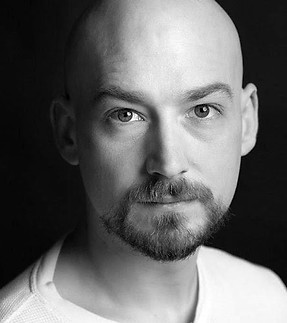
Jeremy Vik

Alexia Maegraith
Workshop Instructor, an Interdisciplinary Performance Artist
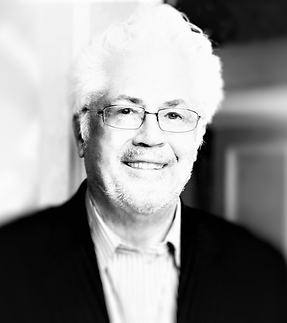
Albert Rafalson
Teacher in Theatre Directing and Acting

Isabella Marchand
Instructor in Blocking and Stage Movement

Kseniia Lohvyniuk
Marketing & Digital Strategist for Performing Arts, Marketing Instructor for Performing Artists
Margot Levinson
Play Analysis Teacher
Jonas Feldman
Ensemble-Building and Teamwork Facilitator
Nora Benett
Teacher of Directing and Design
Helena Mercer
Tutor in Screen Acting

Lisa Rich
Admissions Operations Manager
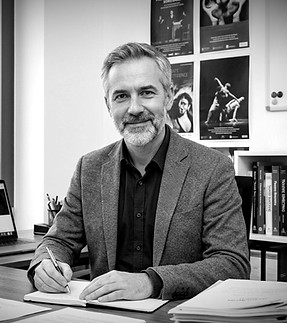
Viktor Kaplan
Enrollment Advisor
Nancy Johnson
Project Manager
Maria Pikanidi
Project Manager