

International Physical Theatre Workshop (Berlin)
The Art of Action on Stage
16-20 August 2027 · Berlin · 28 hours over five days
On stage a movement can be precise, repeated every night and still read as mechanical. This week in Berlin is about what makes it a physical action, and how a director asks an actor for it. Sergei and Gennadiy Ostrenko teach the week through Meyerhold's biomechanics, Chekhov's Psychological Gesture and Stanislavski's Physical Action.
The week looks at action from the director's side. The group brings together directors, choreographers and teachers with actors, dancers and circus artists from many countries. Professionals and pre-professionals work as one multicultural group, and NIPAI selects every participant by CV and goals.
You take home tasks for movement, body angle and place in space, for your next rehearsal, class or performance.
THE CENTRE OF THE WORK
Mechanical and physical action: what's the difference?
An actor can repeat a movement exactly, night after night, and the audience still sees only its outline. What turns that movement into a physical action is the question the five days work on.
A director, choreographer or teacher learns to see the difference and turn it into a task an actor can carry out and repeat. The task covers what the body does, which angle it shows to the audience, and where it stands in the space and towards partners. Performers work from the other side of the same task, looking for the action inside the movement.
Single actions then join into images in space that the audience can read and that serve the dramaturgy. Tasks of this kind add up to a stage language that the cast understands and can repeat from one rehearsal to the next.
Gennadiy Ostrenko reads a stage composition as Meyerhold did: a score of pauses and mise-en-scènes in three-dimensional space. In that score the gaze, the line of sight and the angle of a body all carry meaning.
WHAT THE FIVE DAYS COVER
Meyerhold's biomechanics. Etudes that make an intention visible through rhythm and precise form. For a director they are a lesson in composition: how the position of a single body reads from the auditorium.
Chekhov's Psychological Gesture. One strong gesture of the whole body that carries what the character wants. A director can give it to an actor as a task, and in the scene it stays as the source of smaller movements.
Stanislavski's Physical Action. The chain of concrete actions through which a character pursues a goal. Here it becomes the line a director builds a scene on, so that every movement has a reason.
Improvisation-based training. Material appears in the room, with partners, and then gets shaped. You practise choosing what serves the scene and turning it into a task.
Movement dramaturgy. How movement tells the story of a scene from one event to the next, alongside the text or in its place.
Scene composition. Placing actors in the space so that the audience reads the relations between characters at a glance.


AFTER THE FIVE DAYS
Five days give you a way of looking and a set of tasks. Where they lead depends on how you use them in your own work.
In rehearsal and staging. Directors and choreographers can try tasks for movement, body angle and place in space with their own cast.
In a role, a choreography or an act. Actors, dancers and circus artists can use the same tasks on their own material, so each movement carries a goal.
In training. Etudes and partner exercises from the week can open a company's training or a first rehearsal with a new ensemble.
In teaching. If you teach acting, dance, movement or directing, you can adapt the tasks for a class or use them in a student production.
For a funder or employer. The creative report records your own conclusions from the week. Together with the Certificate of Participation, it can support a funding application or a professional development report.
With colleagues. The group comes from many countries and schools, and the people you meet in the studio may become partners in later projects.
WHO IS IN THE ROOM
Directors and actors who stage their own work
The week shows directing from the studio floor: how mise-en-scène and scene composition are built with a group of performers. You see how people from many countries and schools become an ensemble within a few days. You can bring questions from your own productions to the talks in the circle, and take the approaches into your next production.
Teachers who stage work with students
A student production needs tasks that a whole group can learn and repeat. You can adapt the tasks from the week for a class or a production. Your creative report becomes a written record of the method, and the Certificate of Participation lists the 28 hours.
Choreographers and movement directors
The question is often how a movement gets its purpose and its place in the mise-en-scène. The week works on movement dramaturgy and scene composition, with tasks that tie a movement to what the character wants. You can use them when you stage movement for a director or an ensemble.
Actors, dancers and circus artists
A role, a choreography and an act all ask for movement with a goal. Here movement becomes part of the structure of a scene, tied to the character and to the partner. You practise answering a director's physical task with a precise action, and you can bring this into your next role, piece or act.
Practitioners from other physical traditions
If you trained in a Lecoq, Grotowski or Decroux line, in Butoh or in contemporary dance, you bring a physical language of your own. Set beside the Russian psychophysical school, it gives you two ways of building an action, and you can use both when you stage.
INTERNATIONAL GROUP
Since 2000 NIPAI has trained more than 3,000 performing arts professionals from over 60 countries on six continents.
For a director, a multicultural group tests the stage language itself. When actors from another country and another school read your task the same way, the task is clear.
For a picture of an earlier group, see the report on 21-25 April 2025 - The Art of Action on Stage, with video reviews from participants.
PHOTOS & VIDEOS


WHY SELECTION EXISTS
Every task in this week is tested on partners. NIPAI reads each application and selects participants by background and goals, so that the group can work together and learn from each other.
The group brings together professionals and pre-professionals. In the application form you describe your motivation and add links to your work, which shows NIPAI whether the group fits your stage.
Requirements:
Experience in the performing arts, as a director, choreographer, actor, dancer, performer or teacher, and readiness for concentrated physical work in the studio.
Readiness to try unfamiliar methods and to make mistakes in front of others.
Partner and group work, including physical contact.
Working English.
Minimum age 18.
Agreement with NIPAI's etiquette and terms and conditions.
THE MASTERS
Sergei and Gennadiy Ostrenko stage work as well as teach it: Sergei as a theatre director, Gennadiy as a movement director and stage designer. Their method grew out of productions with international casts and short rehearsal periods. It joins Meyerhold's biomechanics, Chekhov's Psychological Gesture and Stanislavski's Physical Action.

Sergei Ostrenko
Theatre director, choreographer and teacher of acting and directing, founder and Artistic Director of NIPAI. He has directed more than 40 productions with international casts, noted for their visual and spatial composition. Since 1988 he has taught in professional theatre education, including at the Latvian Academy of Culture and the University of Calgary.

Gennadiy Ostrenko
Movement director, stage designer, choreographer and teacher of Meyerhold's Theatre Biomechanics. He created movement and choreography for four productions of the International Shakespeare Performance Project. For one of them, Love and Death in Verona (Saratov, 2015), he also made the stage adaptation and scenography. Together with Sergei he developed the Ostrenko Brothers' Method.
SINCE 2000
NIPAI has been working in international performing arts education since 2000. More than one hundred educational and artistic projects have passed through the Institute in that time.
The number on its own says little. What it means is that several generations of artists have entered these rehearsal rooms, trained through these methods, returned to their own countries and professional contexts, and continued the work - in performance, teaching, directing, choreography, and new collaborations. Some of them now train other artists. Some lead ensembles. Some have built methods and projects of their own.
We see performing arts training as part of a longer exchange between artists, teachers, rehearsal rooms and generations. A method changes when another practitioner takes it into their own work. A workshop continues when something found in a Berlin studio appears later in a rehearsal room somewhere else.
Each new participant becomes part of that.


PAST STUDENTS


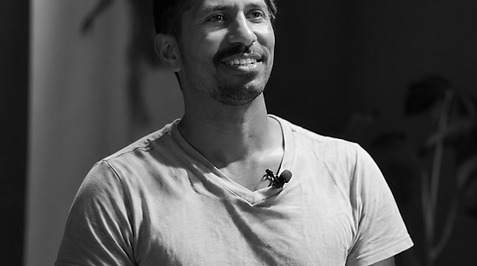
“Working at the amazing Eden Studios with such a wonderful group of artists from all around the world was incredibly motivating. It meant so much to me to explore physical theatre in such a creative and collaborative environment.”
Birdal Birdal, Turkey
International Physical Theatre Workshop: The Art of Action on Stage, Berlin · Google Maps review
“In ‘The Art of Action on Stage’ the interplay between performers is tried out in different exercises. From the Ostrenko brothers, through the approach of ‘experiencing it yourself’ and the ‘just do it’ principle, you learn that you can easily tell different stories from simple sequences of movement. After the first attempt, feedback follows straight away, with suggestions for developing and refining the work.”
Vika Kissler, Germany
The Art of Action on Stage · Google Maps review, translated from German
“I learned how to give clear and brief instructions to actors by experiencing the process myself. Compared with knowledge gained through words, what I learned through the body was wisdom that might last longer and have a greater effect. As a director, I realized that getting actors involved and having them experience things somatically is much more effective than intellectual discussions.”
Siu Hei Chung, Hong Kong
International Physical Theatre Workshop · creative report
“I love the process of the workshop, it changes my approach to acting, directing and teaching.”
Aslög Hildebrand
NIPAI workshop and IUGTE conference 2024 · Google Maps review
FEES AND REGISTRATION
Early Bird tuition is €550 for registrations confirmed until 21 November 2026. After that date the fee is €650.
The fee covers all training sessions across the five days (28 working hours) and use of the professional studio. The Certificate of Participation follows the full programme and the creative report.
You arrange your own accommodation, meals and travel. Registered participants receive NIPAI's suggestions for places to stay near the studio.
To apply, complete the application form and attach your CV. NIPAI reviews every application and replies by email; if you are accepted, you confirm your place by paying the fee.
By participating in our events, participants are expected to follow our etiquette and terms and conditions.
FUNDING & SUPPORT
Depending on the funder, support can cover the fee, travel or accommodation. Places to look:
NIPAI's Funding Opportunities section, with funding databases and a step-by-step plan;
arts councils, cultural foundations and mobility schemes in your country;
your theatre, university or employer, through a professional development budget.
If a funder needs documents, NIPAI provides them on request:
a confirmation of your application status or participation;
an invoice or payment confirmation;
a description of the workshop.
Write to info@nipai.org with the funder's name, the deadline and the document you need.
CERTIFICATE
The Certificate of Participation is awarded to participants who attend the full 28 hours of training and submit a creative report by the given deadline. The certificate states the 28 hours.
The creative report is a written reflection in essay form of at least 1,500 words, or a short video. In it you describe your experience, your main insights and how you plan to use the tools in your work.
The report is a structured moment to look back at the five days. The certificate and the report can support a funding application or a professional development report at your institution.


VENUE
DOCK 11 EDEN
Breite Str. 43, 13187 Berlin (Pankow)
Registered participants receive detailed information about the venue.

FAQs
What level do I need?
Experience in the performing arts at a professional or pre-professional level, and a minimum age of 18. NIPAI reads each application and selects by CV and goals.
Is this physical theatre workshop for directors or for performers?
For both. The week looks at physical action from the side of the person who stages it. The group brings together directors and choreographers with actors, dancers and circus artists, and each takes something different from the same tasks.
What can I use from the week in my own work?
Directors and choreographers take tasks for movement, body angle and place in space to try with their own cast. Actors, dancers and circus artists take a way of giving each movement a goal, so that it reads from the auditorium. The creative report is where you write down what you plan to use.
What does the fee include, and what do I pay for myself?
The fee covers the 28 hours of training and use of the studio. You arrange and pay for your own travel, accommodation and meals. Payment is by bank transfer or PayPal.
Can NIPAI provide documents for a funder or employer?
Yes, on request: a confirmation of your application status or participation, an invoice or payment confirmation, or a description of the workshop. Write to info@nipai.org with the funder's name, the deadline and the document you need.
What language is the workshop taught in?
English. Questions are answered at set times during the sessions.