

3-MONTH DISTANCE LEARNING PROGRAMME
Digital Presence for
Performing Artists
A Career Development Programme Built on Your Own Work
For directors, choreographers, makers of physical and interdisciplinary theatre and performers who have work to show and a next professional move in view. Over twelve weeks, you have the time and structure to build the materials that move calls for, use them in real approaches and applications, and set up a working rhythm to continue on your own.
The presentation describes the programme week by week and gives the schedule, time zone and next start dates. We send it to you personally.
DURATION
12 weeks
FORMAT
Distance learning, two live sessions a week
TUITION
€2,450
Between the work and the people who programme it
For many independent makers and performers, invitations come through people who already know the work. A new venue, residency, festival or casting office needs material a stranger can read and assess in a few minutes.
That is where the time goes. An open call appears with a two-week deadline, and the project description has to be written from scratch. The bio on file was written for a funder and now goes to a curator. The full recording sits behind a link that asks for a login, and the programmer opening it on a phone moves on.
Each week of the programme you prepare one piece of your package from the work you already have, for a specific addressee, and use it in a real professional action.
Who the programme is for
The programme is for makers and performers preparing to approach new organisations, residencies, festivals, casting professionals or partner projects in the next 6 to 12 months.
01
Taking realised work further
Most invitations for your first works have come through your own circle, and now you want venues and festivals beyond it to see them.
02
A work in progress looking for partners
A substantial piece in development needs a residency, a co-producer or a partner organisation. You work on telling development calls from presentation calls and preparing what each one asks for.
03
A new city, country or return
You have moved, returned after a break or started working in another language, and your experience needs to read clearly to people meeting it for the first time.
The programme fits when you have:
at least one realised piece or a substantial work in progress you can show, or recent credits and recordings if you perform;
a next professional move you can name, such as a residency application or a first approach to venues abroad;
up to 7 hours a week, including the two live sessions;
availability for sessions at fixed times across all twelve weeks.
For performers
Actors, dancers and performers follow the same twelve weeks. Three of them are adapted to hiring, with a profile on the casting platform of your market, a CV, headshots and skill clips, and a submission or an approach to an agent under the agent's own rules.
How a week works
Two live sessions by video call, with your own work in between.
1
SESSION 1 · LECTURE · UP TO 2 HOURS
You set your commitment for the week, one result and one professional action. The tutor shows the week's method on a worked example and sets the homework. You receive the lecture presentation afterwards.
2
BETWEEN SESSIONS · 2 TO 3 HOURS
You apply the method to your own material and send a link to the result before the second session.
3
SESSION 2 · REVIEW · UP TO 2 HOURS
You show your homework and one revised element from the week before, with a few lines on what changed and why. The tutor goes through each piece with you and answers your questions, and the last 15 minutes set your next step.
Feedback is given live, always in the same order. You hear what already does its job, the main obstacle for the person receiving the material, one change, and how to check it yourself. The tutor sums up against the shared criteria, and the decision to revise stays with you.
ONE WEEK IN PRACTICE
Week 2
The lecture shows one bio written for two different addressees and when each version works. At home you write a positioning statement, a bio in two lengths and a first message to a named addressee, then send a relevant request or piece of news to an existing or new contact. In the review, your text is read the way its addressee would read it.

Twelve weeks in three stages
Each block of four weeks ends with a checkpoint. Work with real open calls starts in Week 1, and in the last four weeks you run the cycle with less direction from the tutor. If one of your deadlines comes earlier, your application can be reviewed earlier.
01
WEEKS 1 TO 4
Task and package
An audit of your materials and a Career Brief naming one professional move, one main type of opportunity and up to two markets. Then positioning and bio, a CV, a case study and one working link that opens on a phone.
CHECKPOINT · WEEK 4
Your portfolio reviewed against the rubric.
02
WEEKS 5 TO 8
Application
Video as evidence of the work, research into 10 to 15 organisations, a full application prepared for a real open call, and the follow-up after you send it.
CHECKPOINT · WEEK 8
The content and relevance of your approaches.
03
WEEKS 9 TO 12
Independent cycle
What replies and silence actually show, a second cycle you run yourself, a working rhythm around touring, rehearsals and teaching, and a 90-day plan.
CHECKPOINT · WEEK 12
Your package presented at the review and compared with your starting point.
The programme presentation describes every week in detail.
What you can build
Twelve weeks give you room to build a professional package, test it in use and set up a way of working to continue on your own.
01
A professional package for your next move

The package can include:
a Career Brief
a positioning statement and a bio in two lengths
a master CV and one adapted version
one working portfolio link
one or two finished case studies
a new or reworked video
an indexed media archive with credits and permissions
a checked database of 10 to 15 organisations and contacts
a calendar of 4 to 6 opportunities or future windows
an outreach toolkit for introductions, proposals, reconnecting and follow-up
an Action Log
a 90-day plan with three priorities
02
Real approaches and applications
The plan leaves room for four to six personal approaches and, where a suitable call is open, one or two applications, all sent by you and logged. Without a suitable window, the work goes into an application-ready package and other real actions, recorded as such.
03
The skills behind the package
The weeks give you practice in choosing opportunities by fit and eligibility, explaining your practice to a specific reader, documenting evidence with exact credits, writing to published criteria, and reading replies for what they show.
How your materials are assessed
Seven criteria, known from Week 1, cover relevance to the addressee, clarity for a first-time reader, evidence that can be checked, access on a phone without a login, accurate dates and credits, a clear next step, and your ability to adapt the material yourself.
The programme assesses your materials and your ability to run the cycle on your own. Selection decisions belong to the theatres, festivals, funders and casting professionals you approach, so their replies stay outside the assessment.
Your tutor
Kseniia Lohvyniuk leads both weekly sessions as professional adviser, editor of your materials and guide for your real actions, and reads your intake questionnaire before the start. She has led NIPAI's marketing and international communication since 2022 and curated the 20th to 22nd International Performing Arts Conferences at Laubegg Castle. She has worked in marketing and public relations at the Nationaltheater Mannheim and the Mittelsächsische Theater und Philharmonie, trained in acting in Odessa and completed NIPAI's year-long Theatre Directing for Beginners programme.
Kseniia comments on how your material fits its task and addressee. Artistic decisions stay with you, and questions about interpreting your own work come back to you with options. You write and send everything yourself and keep control of your accounts. From Week 10 you assess your work first, and she checks your reasoning.


START ON YOUR OWN · FREE GUIDE
How to look for work through social media
Seven unpopular opinions from Kseniia Lohvyniuk, each with steps you can try this week: the thirty people who matter for your work, a ten-second test for your profile, a comment that opens a conversation, a message in five lines and a routine of thirty minutes a week. With worksheets to fill in as you go. 14 pages, free.
Programme details and tuition
Duration
12 weeks in three blocks of four
Live sessions
Up to 48 hours by video call: up to 24 hours of lectures and up to 24 hours of homework reviews
Weekly workload
Up to 4 hours of sessions and about 2 to 3 hours of homework, plus optional personal practice
Group
1 to 8 participants. The programme starts even with one participant.
Tuition
€2,450
Includes every lecture presentation, the weekly assignments, live reviews of your work and the tutor's guidance throughout.
Own costs
Depending on your materials, filming or editing, and a website or portfolio tool. Where the task allows, you can work with what you already have.
Funding
Tutor
Kseniia Lohvyniuk
Language
Entry requirements
Terms
Participation is governed by the NIPAI Terms and Conditions.
Other NIPAI formats
4 EVENINGS · BERLIN
Digital Presence Through the Body for Performing Artists
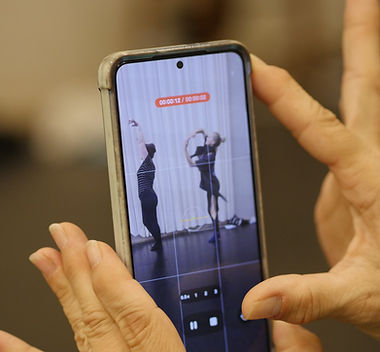
An in-person lab in January 2027, working on your profile through movement and a phone camera. Optional for this programme.
3 MONTHS
From Stage to Screen
For stage-trained performers who need on-camera work first.
3 MONTHS
Choreography and Blocking in Performance
The stage picture, positions and groupings.
3 WEEKS
The 3-week programmes
One focused directing task with individual written feedback.
How to apply
1
APPLICATION FORM
Name your practice, where you live and a link to your work, and attach your CV. In the motivation field, describe your professional move for the next 6 to 12 months, your target market and the time you have each week. Add links to all your social media profiles and your website, if you have one.
2
REVIEW OF FIT
Each application is reviewed individually for fit with your practice and your next move.
3
PRESENTATION AND OFFER
You receive the programme presentation personally, with the schedule, time zone, next start dates and an offer.
4
REGISTRATION AND PAYMENT
Registration, a study contract and enrolment documents follow, and payment secures your place.
Frequently asked questions
I have little material. Can I apply?
You need one piece of work to show, realised or in progress, or recent credits and recordings if you perform. The Week 1 audit shows what is missing, and your plan can then include one new piece that is realistic to make, such as a short recording or a case study.
Do I need a website?
You need one working link that opens on a phone without a login and leads to your work and contact details. A website, a portfolio page or a well-kept profile can all serve.
Will I have to post on social media?
Posting is optional, and so is personal storytelling. The core of the programme is materials, research and direct approaches. If a public profile serves your task, you work on it on your own terms. Follower numbers play no part in the assessment.
What if nobody replies?
Silence is common in programming and selection. In Week 9 you look at what a reply or a silence actually shows and decide whether to revise the material or the choice of addressees. The package, the records and the method stay with you whatever the answers.
I already have an agent. Is the programme relevant?
Yes, for tasks outside your agent's role, such as approaching venues or residencies for your own project. You agree the task before the start and follow your agent's rules for anything they handle.
What happens if I miss a session?
A missed lecture is covered by its presentation, and that week's homework comes to the next review. After two missed weekly stages, your tutor makes a recovery plan with you. If you miss three or more sessions, you may be withdrawn from the programme without a refund. NIPAI decides each case individually.

FREE GUIDE
How to look for work through social media
×
Seven unpopular opinions, with steps to try this week. 14 pages by Kseniia Lohvyniuk.