
What Is the Importance of Blocking In a Theater Performance
Blocking and Mise-en-scène: The Art of Staging Meaning, Not Just Bodies Or Why "Creative Chaos" On Stage Is Just Chaos
You know what a director says when they don't know how to work with mise-en-scène? "We have a free form; the actors choose where to stand themselves." Sounds progressive, right? In reality, it's like saying: "I don't know how to pilot a plane, let it fly itself." The audience ends up flying off to who knows where, and the actors - well, it's completely unclear where they go.

Let's be honest: neglecting mise-en-scène is not a rebellion or a "fresh perspective," but ordinary professional incompetence prettily packaged in words about creative freedom. When a director declares: "We don't fix the partners' positions, we have freedom," they are essentially telling the cast and the audience: "I am not managing the attention." Theater exists within the coordinates of the audience's gaze. Without precise actor placement, the gaze scatters, the rhythm breaks, the meaning evaporates. Examples? Oh, there are loads! Remember that "revolutionary" version of "Hamlet" in a certain capital city theater (won't point fingers to avoid glorifying the fiasco): the director "liberated" the stage from the "tyranny of logic," and Hamlet wandered around like a ghost at a sale, while Horatio muttered monologues in a corner, invisible to half the auditorium. The audience could barely hold back yawns at the climax, and the tragedy drowned in farce.

How a Performance Dies Without Mise-en-scène.
The climax happens "on bent knees": the key line is delivered sideways, the partner is blocked, the audience reads someone's napes instead of the conflict.
The chorus turns into a "clumpy" mass in the center: no compositional logic, everyone on the same level, so what's important is not the scene's line, but a random cough in the hall.
The lighting does someone else's job: an actor is "saved" by a spotlight because they were placed on a dead diagonal.
Distances are unmotivated: the text says whisper, the stage geography says orator in a square. Contact is absent, the scene's energy dissipates.
But enough complaining - let's celebrate how masterful blocking brings a performance to life even on bare walls, without stars or pyrotechnics. Look at the ascetic works of someone like Tadashi Suzuki: an empty stage, but every step is like a thunderclap, emphasizing conflict, creating a whirlwind of energy. Mise-en-scène here is a magician: a simple shift from light to shadow intensifies the hero's isolation, makes the text breathe, pulsate. Without fanfare, the performance comes alive, the audience holds its breath—that's the power of real mastery!
The Magic of Proper Blocking
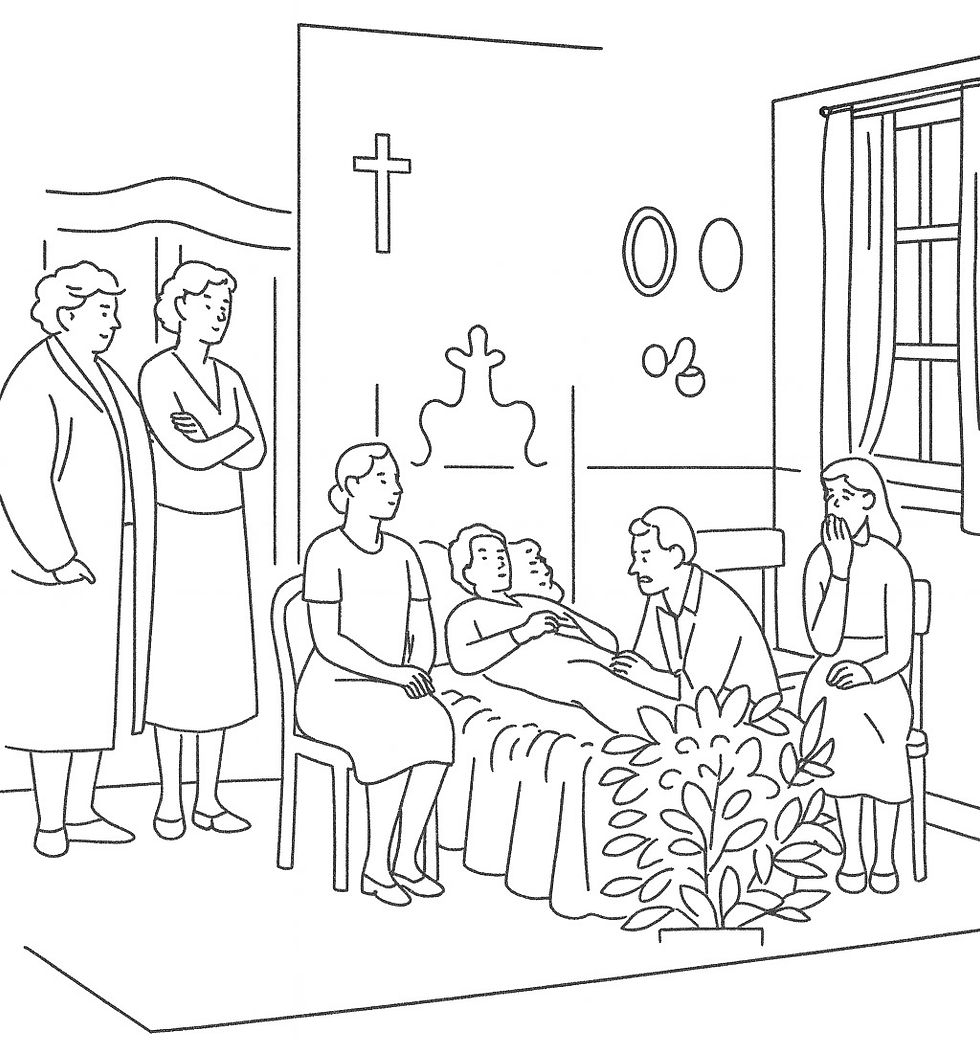
And now - for the wonders. Skillful mise-en-scène can turn an empty stage into a cosmos, and two actors into a whole universe. It works like an invisible conductor: directs the audience's gaze, creates rhythm, suggests where to tense up and where to relax.
Good blocking is when the distance between actors tells of their relationship better than any words. When height becomes power, a diagonal becomes conflict, and a pause in movement is louder than any scream.
You don't need million-dollar budgets. You need precision. Like in surgery, only more fun.
A Letter to Directors, Actors, and Spectators
Dear Directors!
Stop hiding behind the word "process." "Everything is in process for us" is not an excuse, it's a diagnosis. The process should lead somewhere, not last forever, like road repairs.
Dear Actors!
Don't turn into living furniture. If the director says "stand somewhere," demand specifics: why, why exactly here, what does it give the scene? You are not extras in your own profession.
How to Learn to Create Magic: Courses at NIPAI
If you've read this far and are thinking: "I want to learn!", we have an offer.
Our training program:
Fundamentals of Spatial Thinking
Module "Choreography & Blocking in Performance" - we study diagonals, levels, stage focus. We work remotely but practice on real stages. No theoretical reasoning - only live work.
Movement Laboratory
Intensives in physical theater and Director & Ensemble Building. We learn to connect text with action, work with tempo-rhythm, "hear" the auditorium.
Personal Mentorship
Curator sessions 1:1 within the Theatre Directing Certificate Program. We analyze your works via video, correct mistakes, find strengths.
Practical Portfolio
We create three different scenes: a static one (minimum movement, maximum meaning), a multi-figure one (5-7 people), and a conflict scene with dynamics of distances. Each in two tempos.
Professional Tools
We provide a checklist for mise-en-scène analysis, teach how to video record rehearsals, create transition maps.
What is needed for application:
A short portfolio (not a tome of memoirs, but a few standout works)
A motivation letter (tell us why you need this)
Sometimes - a video introduction
Spots are limited, selection is serious. But the groups are small, attention is personal.
Homework (Free!)
Want to test yourself right now? Stage any scene so that the audience understands it without sound. If the meaning isn't readable silently - the problem is in the mise-en-scène, not the actors.
Remember: mise-en-scène is not "a beautiful arrangement of people on stage." It is the grammar of the theatrical language. You can break the rules - but only by knowing them. Otherwise, it's not avant-garde, it's just illiteracy.
And yes, good blocking can save even a weak text. But bad blocking can kill even Shakespeare. Choose the side of magic, not chaos!
P.S. Want feedback on your work? You can send us your staging exercise for review, and we'll provide brief feedback via email at info@nipai.org
Sergei Ostrenko
*translated from Russian using AI

Comments